

The Paper That Spoke of Forever
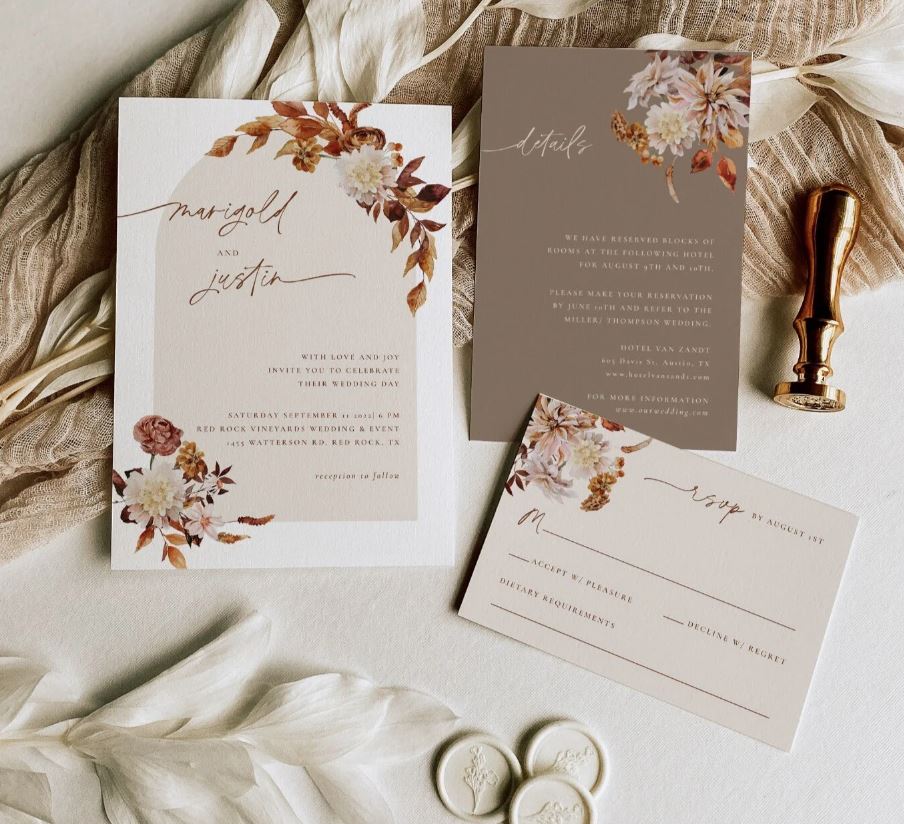
Wedding Invitations Transform Words into the First Breath of a Love Story
The Invitation as a Prelude to Emotion
A wedding invitation is not simply a piece of paper or a digital card, it is the first whisper of what a wedding will feel like. Before the guests see the venue, taste the food, or hear the music, they encounter the invitation. It serves as the threshold between imagination and experience, setting the tone for everything that follows. The colors, fonts, and materials chosen are not arbitrary, they carry the essence of the couple’s story. Every curve of a letter, every fold of the envelope becomes a reflection of identity. Invitations have evolved far beyond formal announcements. They are expressions of artistry, emotion, and anticipation. They invite not just attendance but participation in a story that is about to unfold.
The act of sending invitations is rooted in both tradition and transformation. Historically, they were symbols of elegance, written by hand and delivered with care. In modern celebrations, the medium has expanded to include prints, videos, and interactive experiences. Yet the heart of it remains unchanged. An invitation still represents a beginning, a bridge between the couple and their guests. It is the first moment where love takes physical or digital form, extending outward into the world. The invitation tells people, “Come witness our forever begin,” and in that gesture, it already becomes part of the memory it introduces.
The Craft of Design and Storytelling
Designing a wedding invitation is an art form that combines aesthetics with emotion. The design does not merely decorate information, it narrates personality. Some invitations whisper romance through soft palettes and flowing calligraphy. Others announce joy boldly with rich colors and geometric patterns. The process begins with inspiration, often drawn from the theme, the location, or even the couple’s shared history. The designer translates these ideas into visual harmony, balancing typography, texture, and imagery to form a cohesive whole. The best designs achieve what all great art does: they feel inevitable, as if they could not have been made any other way.
Storytelling through design means understanding subtleties. A hand-painted floral border might echo the flowers that will appear on the wedding day. A gold-embossed seal could symbolize heritage or continuity. The weight of the paper, the sheen of ink, and even the scent of the envelope, all evoke sensory connection. For digital invitations, motion and sound replace tactile cues, adding another layer of experience. A softly animated petal drift or a melody that plays as the invitation opens can move emotion just as effectively as ink and parchment. Every element must serve the same purpose: to express love not through language alone but through feeling made visible.
The Tradition and Evolution of Announcement
Long before modern printing or email, wedding invitations carried the weight of social ritual. They were handwritten, often by professional scribes, and delivered by couriers or heralds. The language was formal, filled with poetic phrasing and honorifics that reflected the ceremony’s grandeur. As printing technology advanced, invitations became more accessible, but they retained their sense of importance. They signaled not only a date but an event of meaning, a gathering of families, a moment of unity. Over time, as society evolved, so did the invitation. Modern couples began to favor individuality over uniformity, letting creativity replace convention.
Today’s invitations embrace diversity. They honor tradition while welcoming innovation. Some couples choose minimalist styles with modern typography and subtle textures. Others revisit classic techniques like letterpress or wax sealing. Many combine both, merging the elegance of the past with the freedom of the present. The wording too has changed. Where once formality ruled, now authenticity leads. Couples speak in their own voices, infusing humor, sentiment, or simplicity into their phrasing. This evolution shows how wedding invitations mirror the world around them. They adapt, they reinvent, yet they always remain symbols of gathering and joy.
The Language of Words and Tone
Words matter deeply in an invitation. They hold not only information but emotion. The phrasing determines how the invitation feels, formal, casual, intimate, or poetic. Classic invitations might begin with “The honor of your presence,” while modern ones might say “Join us in celebrating.” Both convey welcome, but in different tones. The language must align with the couple’s character and the atmosphere of their day. Some prefer timeless elegance, crafting sentences that echo centuries of ceremony. Others favor conversational sincerity, inviting guests to feel the warmth of friendship and familiarity. The balance lies in speaking truthfully while honoring the significance of the event.
Typography supports the message by shaping how the words are perceived. A delicate script might evoke romance, while clean sans-serif fonts suggest modern simplicity. Even spacing and alignment contribute to rhythm, guiding the reader’s eye like a melody. For digital invitations, animation can replace punctuation, letting words appear gradually to heighten emotion. The tone must never feel imposed. It should feel like an extension of the couple’s voice, natural and sincere. When guests read the words, they should hear the couple’s personalities in them, gentle, humorous, elegant, or adventurous. The language of the invitation is the first dialogue between love and its witnesses.
The Emotion of Material and Texture
Material has always played a central role in how invitations are experienced. Paper is tactile memory, it carries the warmth of touch and the permanence of intention. The choice of texture can change the entire perception of an invitation. Smooth cardstock conveys polish and formality, while handmade paper suggests intimacy and craft. Modern innovations have expanded the possibilities even further. Acrylic, wood, metal, and fabric invitations offer fresh interpretations, each reflecting a unique aspect of style. Some couples incorporate sustainable materials, aligning their wedding’s design with values of care and responsibility. These choices reveal that beauty and conscience can coexist gracefully.
Texture engages more than the hand; it engages emotion. Guests often keep invitations as keepsakes not only because of what they say but how they feel. The weight of the paper, the raised embossing, the shimmer of foil, these are sensory memories. Even envelopes become part of the experience. Their linings, seals, and colors create anticipation before the invitation itself is revealed. For digital formats, interactivity replaces texture. Motion, sound, and light replicate the same sense of discovery. Regardless of medium, the invitation must invite more than the eyes. It must touch the soul with its presence, making even a small card feel eternal.
The Dialogue Between Tradition and Technology
As weddings evolve, so too do the invitations that precede them. Technology has opened a new world of creative possibility. Digital invitations, online RSVPs, and animated designs offer efficiency and accessibility, especially for global celebrations. They reduce waste and simplify coordination. Yet, for many couples, traditional printed invitations remain sacred. They represent something tangible, something to hold and treasure. The challenge and opportunity of the modern era lie in finding harmony between these two worlds. Many couples choose hybrid approaches, sending digital save-the-dates followed by physical invitations that carry emotional weight. This combination allows convenience without sacrificing sentiment.
Technology also enhances personalization. Interactive timelines, maps, or video messages can be integrated into digital formats, allowing guests to experience the story before the event begins. Artificial intelligence tools assist in design, helping couples create invitations that mirror their aesthetic vision. Meanwhile, augmented reality elements can bring printed invitations to life, blending old-world artistry with modern innovation. The relationship between tradition and technology is not one of opposition but evolution. When used with intention, technology becomes another form of artistry, expanding the ways love can be shared and remembered.
The Hidden Symbolism Within the Details
Every detail of an invitation holds symbolic potential. The choice of motif, the placement of monograms, the use of borders or frames, each element carries layered meaning. Floral patterns often symbolize growth and renewal, while geometric shapes suggest unity and strength. The inclusion of natural elements like leaves or feathers speaks of harmony and freedom. Even color holds emotional depth. White represents purity, gold symbolizes abundance, and pastels convey tenderness. These symbols work quietly, often unnoticed, yet they shape perception. Guests feel their influence even when they cannot name it.
Seals and closures also tell stories. A wax seal marked with initials or a crest suggests legacy. A ribbon tied by hand speaks of intimacy. The act of opening such details mirrors the unveiling of love itself, slow, deliberate, and meaningful. Some couples take this further, embedding hidden messages or poetic lines inside the folds of the paper. These personal touches create layers of discovery, transforming an ordinary envelope into a keepsake of sentiment. The details do not exist for decoration alone. They remind guests that the wedding is not an event to attend but a narrative to enter. Every mark and symbol becomes part of that story’s living language.
The Invitation as Memory and Artifact
Once the wedding day has passed, the invitation remains as a relic of anticipation. It becomes a tangible link to the joy that preceded the vows. Many couples preserve their invitations in albums, frames, or shadow boxes, treating them as heirlooms. Over time, they become symbols not just of the day but of the journey that led to it. The date, once in the future, now marks a cherished past. The ink that once introduced an event now reminds of promises fulfilled. In this way, the invitation transcends function and becomes art. It outlives the moment it announced, aging gracefully alongside the marriage it began.
As years pass, the invitation may take on new meaning. Children and grandchildren might find it tucked in a drawer, unfolding it to see the beginning of their family’s story. Its typography may feel vintage, its colors faded, but its sentiment remains alive. This endurance is what makes wedding invitations unlike any other printed form. They capture anticipation in its purest state. They hold the pause between dream and reality, between plan and memory. Each invitation becomes a time capsule of emotion, preserving the very breath of a love about to begin.
The Promise Carried in an Envelope
In the end, a wedding invitation is more than an announcement, it is a quiet promise delivered by hand or by light. It carries not just names and dates but an essence of something sacred. It tells guests that something meaningful is about to unfold and that they are part of it. Whether made of silk paper or pixels, whether read aloud or opened in silence, an invitation is the first chapter of a new story. It unites design and emotion, art and memory, simplicity and depth. In that single envelope lies the future, folded neatly, waiting to be opened by those who will help write the rest of the tale. Through ink, texture, and tone, the invitation speaks softly yet profoundly: love is coming, and you are invited to witness it bloom.