
The Garden That Spoke in Color
Flowers Become the Unspoken Language of Love and Design
The Spirit Within the Petal
Every flower carries its own heartbeat. In weddings, floral arrangements do more than decorate a space, they translate emotion into color and scent. A rose is never just a rose, and a lily is never merely a bloom. They become storytellers, their forms expressing what words cannot. The craft of arranging them transforms sentiment into visual poetry, turning an ordinary venue into a living canvas of love. Florists often describe their work as conversation, one held between nature and human emotion. The bride’s bouquet, the centerpieces, even the petals scattered across the aisle, all participate in that dialogue. Together, they whisper affection, reverence, and joy. Floral arrangements capture the intangible, making feeling visible. They remind everyone who enters that beauty can exist not as decoration but as devotion, living for a moment yet remembered for a lifetime.
In the language of weddings, flowers are both ancient and timeless. Their presence dates back to ceremonies of the earliest civilizations, when blossoms symbolized fertility, new beginnings, and unity. Today, their meanings have evolved but their essence remains the same. A well-designed arrangement becomes a bridge between tradition and individuality. Each bloom selected tells a story of choice, of what resonates deeply with the couple’s identity. Some flowers are chosen for their fragrance, others for their symbolism. Together, they form a portrait of emotion, tenderly painted in petals.
The Artistry of Arrangement
The process of designing floral compositions is far more than placing flowers in vases. It is sculpture, storytelling, and choreography all at once. The florist’s hand becomes both artist and interpreter, shaping balance and rhythm through stem and leaf. Composition defines how the eye travels through a space. A cascade bouquet draws movement downward, symbolizing grace and flow. A structured arrangement builds presence and symmetry, communicating strength and timelessness. The artist must balance wildness with refinement, spontaneity with control. Each element, a stem’s curve, a branch’s height, a petal’s edge, contributes to a conversation between nature and design.
The color palette serves as the emotional compass. Soft hues of ivory and blush evoke serenity, while deep tones of burgundy and gold suggest warmth and passion. Texture adds dimension, allowing arrangements to breathe. Mixing delicate petals with coarse foliage creates tension and depth, reminding viewers that love, too, thrives in contrast. The arrangement’s success lies not in abundance but in composition. A single perfect bloom placed with purpose can hold more meaning than a hundred without intention. The artistry lies in restraint, in knowing when the space between flowers speaks louder than the blossoms themselves.
The Role of Season and Story
Nature dictates rhythm. Each season brings its own palette, scent, and symbolism. To work with flowers is to collaborate with time. Spring bursts with renewal through tulips, daffodils, and peonies. Summer radiates confidence in roses, hydrangeas, and sunflowers. Autumn arrives with warmth and nostalgia, expressed through dahlias, chrysanthemums, and rustic greenery. Winter speaks in textures, evergreens, pinecones, and pale blossoms that glow softly against muted skies. Choosing seasonal blooms is not only practical but poetic. It connects the wedding to the moment it lives in, allowing the decor to breathe in harmony with the natural world outside.
Every couple has a story, and every story deserves its own garden. Some choose flowers tied to heritage or culture. Jasmine might recall childhood summers, while lavender carries the scent of travels together. Others select blossoms by memory. A daisy from the first bouquet ever given, a gardenia from a grandmother’s wedding day. The season and story intertwine, creating meaning that reaches beyond color and design. When arranged with care, floral decor becomes autobiography. It is the couple’s life written not in ink but in petal, fragrance, and bloom.
The Symbolism of Shape and Flow
The human eye responds instinctively to form. In floral design, shape communicates mood as clearly as color. A round arrangement conveys unity and completeness, echoing the symbolism of the wedding ring itself. A crescent design suggests movement, ideal for couples who view marriage as an evolving journey. Linear arrangements, often seen in modern weddings, express simplicity and direction. The placement of each element determines the emotional rhythm of the piece. A low centerpiece encourages intimacy and conversation, while a tall sculptural display commands awe and presence. Flow connects all these forms together, guiding vision the way music guides emotion.
Flow is not about symmetry but energy. The way stems lean, petals open, and lines curve determines how a viewer experiences space. Some arrangements feel like whispers, soft and fluid. Others radiate strength and structure. The florist’s mastery lies in knowing how to balance these energies. When guests walk into a venue and feel something before they even understand why, it is often the invisible rhythm of design that has spoken to them. The shapes and flow of the arrangements create an emotional map, drawing people inward toward the heart of the celebration.
The Ceremony and Its Floral Heart
The ceremony space is where everything begins. It holds the sacred stillness before the vows, and the first shared steps afterward. Flowers define its heartbeat. Arches, aisles, and altars all rely on floral design to convey mood and meaning. The arch is perhaps the most symbolic element. It frames the couple as they exchange promises, becoming a living gateway from individuality into unity. Some arches bloom abundantly, overflowing with roses and greenery. Others stay minimalist, allowing the simplicity of form to highlight intimacy. The aisle, too, tells a story. Petals scattered along its length symbolize the journey toward commitment. Whether cascading in soft patterns or arranged with geometric precision, they carry the weight of transition from one chapter to the next.
The altar flowers carry particular resonance. Positioned at the focal point, they symbolize offering, growth, and harmony. Often, these arrangements include blooms chosen for personal or cultural significance. White orchids might represent purity, while ferns symbolize sincerity and protection. The color harmony of the ceremony florals sets the emotional tone for the rest of the event. From this central heart, every other arrangement takes its cue, creating coherence that flows through the reception and beyond. In the language of weddings, the ceremony florals are the prologue, the first breath of beauty that announces forever has begun.
The Reception as a Living Garden
After the vows, the celebration continues in spaces meant for connection. Here, floral arrangements must balance beauty with livability. Tables become landscapes, each one an ecosystem of design. Centerpieces must engage without obstructing conversation. The rule of proportion becomes essential. Low designs encourage warmth and visibility, while suspended installations elevate drama without cluttering the table. Florists often describe this as “designing the air.” Hanging arrangements, floating blooms, and canopy gardens transform ceiling space into poetry. They create intimacy within grandeur, bringing the natural world close to human interaction. Lighting and florals collaborate here, as candles or fairy lights dance across petals, merging glow with bloom.
Reception florals also extend to overlooked details, the bar, the dessert table, the lounge corners. These smaller compositions carry the theme throughout the venue, ensuring that every sightline feels intentional. The repetition of key flowers ties the experience together, making the event feel immersive. Even scent plays its role. Strategic placement of fragrant blooms can influence memory and emotion subtly yet powerfully. Guests may forget the exact shade of a rose but will forever remember the scent that lingered in the air as they toasted love. A well-curated reception transforms guests from observers into participants within a blooming story.
The Emotional Dialogue of Color and Fragrance
Color moves the eye, fragrance moves the soul. The combination of both defines the sensory identity of a wedding. Florists treat this balance with reverence, selecting flowers not only for visual harmony but for their aromatic presence. Garden roses, lilacs, tuberose, and jasmine carry fragrances that evoke nostalgia and intimacy. Meanwhile, eucalyptus, rosemary, and mint add freshness and grounding energy. The interplay of scent and sight creates immersion, turning the event into a living experience rather than a static one. Fragrance connects guests subconsciously to the emotion of the moment, imprinting memory with invisible ink.
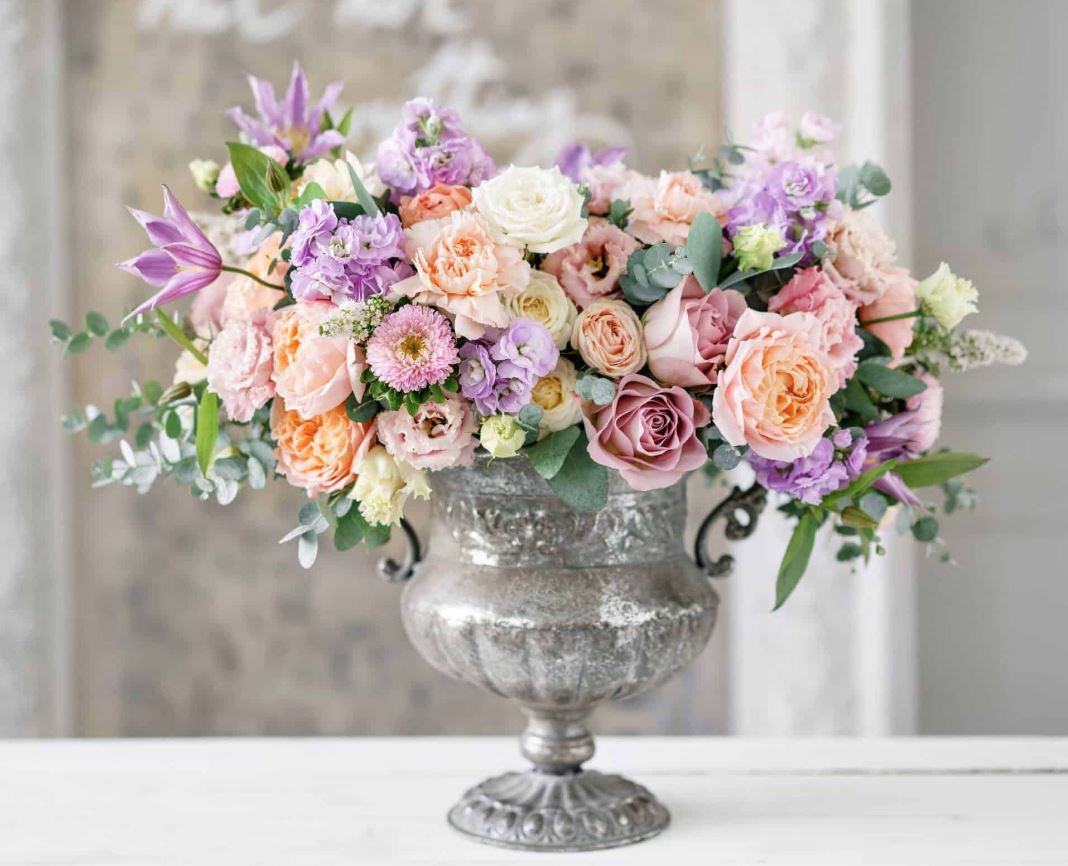
The emotional psychology of color deepens this effect. Warm hues such as blush, peach, and gold convey comfort and joy, while cool tones like lavender, ivory, and sage evoke calm and reflection. The subtle use of contrast, soft neutrals accented with bold highlights, creates emotional rhythm. Florists often describe this as painting with air. Each tone shifts the mood slightly, influencing how guests feel as they move through the space. Together, color and fragrance compose a sensory poem. They remind everyone that love, like scent and light, is both fleeting and eternal, felt more deeply than it can ever be seen.
The Modern Evolution of Floral Art
Floral design today has transcended tradition without losing its heart. Technology, sustainability, and artistry now intersect to redefine what wedding florals can be. Foam-free arrangements, repurposed installations, and zero-waste techniques are becoming standards among mindful florists. Couples increasingly seek meaning over opulence, preferring intentional simplicity to excessive display. Dried flowers, preserved foliage, and sculptural minimalism have reintroduced texture and longevity. These innovations are not aesthetic trends alone, they represent an evolution in values. Weddings now aim to harmonize beauty with responsibility, ensuring that each bloom serves purpose beyond decoration.
Collaboration across disciplines has also expanded the boundaries of floral art. Florists work alongside architects, lighting designers, and stylists to create immersive environments. Some weddings feature living walls, kinetic installations, or floral pathways that shift throughout the event. These designs blur the line between art and experience. Yet, amid all innovation, the essence remains: connection. Flowers, no matter how modern their arrangement, still speak of tenderness, renewal, and human emotion. The modern evolution of floristry does not replace tradition, it refines it, allowing love to express itself through nature’s most eloquent form.
The Petal as Memory
When the last guest departs and the music fades, what remains are fragments, the scent of flowers still lingering in the air, a single petal pressed between pages, a memory wrapped in color. Floral arrangements are temporary by nature, yet their impression lasts beyond their lifespan. They mirror love itself: fragile, fleeting, yet infinitely memorable. Each arrangement becomes a time capsule, preserving the essence of a day when beauty and meaning converged. In their quiet afterlife, dried petals and photographs remind couples of how their love once bloomed in color. The petal becomes memory, and the memory becomes forever. Through flowers, love finds its most graceful reflection, living on long after the stems have faded.